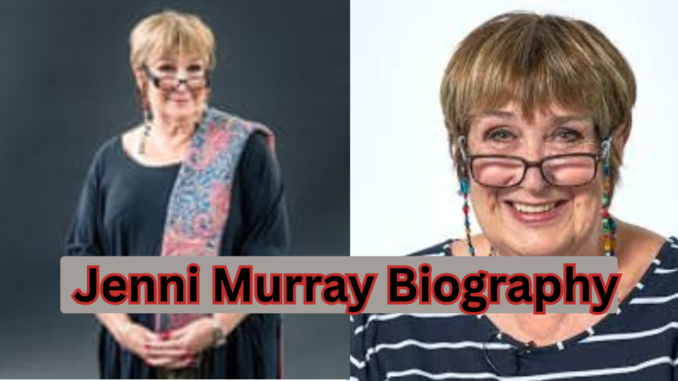
Biography
Jenni Murray, born Jennifer Susan Bailey on May 12, 1950, in Barnsley, West Riding of Yorkshire, England, was one of Britain’s most respected voices in journalism and radio broadcasting. She grew up in a hardworking family, with her father working as an electrical engineer and her mother serving as a civil servant. From an early age, she showed a strong interest in language, communication, and storytelling.
Jenni Murray attended Barnsley Girls’ High School, where she studied subjects like French, English, and History. Her love for language later led her to the University of Hull, where she earned a degree in French and Drama. This academic background gave her the confidence and knowledge needed to pursue a career in media.
Her life was shaped not only by education but also by personal discoveries. At the age of 14, she learned that her father had Jewish roots, a fact that had been kept secret from her. This revelation deeply influenced her understanding of identity, history, and social issues. It later shaped her strong views on racism, equality, and human rights.
Over time, Jenni Murray became a powerful and respected voice in British media. Her work focused on important social topics, especially those affecting women. She built a career based on honesty, intelligence, and the courage to speak openly about difficult issues.
Career
Jenni Murray’s career began in 1973 when she joined BBC Radio Bristol. This was her first step into broadcasting, and it marked the start of a journey that would last several decades. She quickly gained experience and moved into television, working as a reporter and presenter on regional news programs such as South Today.
Her talent and confidence helped her rise quickly within the BBC. In 1983, she became a newsreader and presenter on Newsnight, one of the UK’s most respected news shows. She later worked on Today, where she developed her reputation as a skilled and thoughtful broadcaster.
However, her most famous role came in 1987 when she became the presenter of Woman’s Hour. This program focused on issues affecting women, including health, relationships, careers, and social justice. Murray hosted the show for over three decades, making her one of the longest-serving presenters in British radio history.
During her time on Woman’s Hour, she created a space where important conversations could happen. She interviewed politicians, celebrities, and everyday people, giving a voice to stories that were often ignored. Her style was warm, intelligent, and direct, which made listeners trust and respect her.
In addition to broadcasting, Jenni Murray was also a successful writer. She contributed to major publications like The Guardian, Daily Mail, and Daily Express. She wrote several books covering topics such as women’s rights, parenting, menopause, and history. Her book A History of Britain in 21 Women became especially popular for highlighting the achievements of influential women.
She officially retired from Woman’s Hour in October 2020, ending an era in British radio. Her final episode was emotional and widely celebrated, showing how much she meant to her audience.
Personal Life
Jenni Murray’s personal life was as rich and complex as her career. She was raised in the Church of England, but her understanding of faith and identity evolved over time. After discovering her Jewish heritage as a teenager, she developed a deeper interest in history and culture. Although she did not strictly follow religion, she often spoke about feeling connected to her roots.
Murray was also known for her strong opinions on social issues. She openly discussed topics such as feminism, equality, and women’s rights. While many admired her courage, some of her views, especially on gender identity, sparked public debate and criticism. Despite this, she remained firm in expressing her beliefs.
Her health journey was another important part of her life. In 2006, she was diagnosed with breast cancer. She openly shared her experience with the public, helping to raise awareness about the disease. Her honesty about losing her hair and dealing with treatment made her relatable to many women facing similar challenges.
She also spoke openly about menopause and the importance of discussing women’s health in the workplace. In addition, she underwent a hip replacement in 2008 and later had weight-loss surgery in 2015. Through all these challenges, she remained active, positive, and committed to her work.
Cause of Death
Jenni Murray passed away on March 12, 2026, in London, England, at the age of 75. Her death was announced about a week later, and it brought sadness to many people who had followed her career for years.
While detailed medical information about her passing was not widely disclosed, tributes quickly poured in from across the media world. The Director-General of the BBC described her as a “broadcasting icon,” praising her warmth, intelligence, and courage.
Her death marked the end of a remarkable era in British broadcasting. However, her influence continues through her work, her books, and the conversations she inspired.
Age
Jenni Murray was 75 years old at the time of her death in 2026. She lived a full and meaningful life, dedicating more than 40 years to journalism and broadcasting.
Her long career allowed her to witness and report on major social changes, especially those affecting women. Even after retiring, her voice remained important in public discussions.
Family
Family played an important role in Jenni Murray’s life. She was first married to Brian Murray in 1971 when she was just 21 years old. However, the marriage ended after six years.
Later, she formed a long-term relationship with David Forgham-Bailey. The couple had two sons together and eventually married in 2002. Her family life was often kept private, but she occasionally spoke about the importance of balancing career and motherhood.
Despite her busy professional life, Murray remained closely connected to her children and valued her role as a mother. Her experiences as a parent also influenced her writing, especially on topics related to family and relationships.
Conclusion
Jenni Murray was more than just a broadcaster; she was a voice of truth, courage, and understanding. Her work on Woman’s Hour changed the way important issues were discussed on radio, especially those affecting women.
From her early life in Barnsley to becoming a Dame of the British Empire, her journey was inspiring and impactful. She faced personal challenges with strength and used her platform to educate and empower others.
Even after her passing, her legacy lives on through her work, her words, and the many lives she touched. Jenni Murray will always be remembered as a pioneer in journalism and a champion for meaningful conversation.
FAQs
Who was Jenni Murray?
Jenni Murray was a British journalist and broadcaster best known for presenting Woman’s Hour on BBC Radio 4.
What was Jenni Murray famous for?
She was famous for hosting Woman’s Hour for over 30 years and discussing important issues affecting women.
How old was Jenni Murray when she died?
She was 75 years old at the time of her death in 2026.
Did Jenni Murray write any books?
Yes, she wrote several books on topics like women’s history, parenting, and menopause.
What caused Jenni Murray’s death?
Her exact cause of death was not publicly detailed, but she passed away in March 2026 in London.
Tomson Charles is a journalist and writer who covers battery-material recycling, urban mining, and the growing use of microreactors in industry. With 10 years of experience in industrial reporting, he explains new technologies and industry changes in clear, simple terms. He holds both a BSc and an MSc in Electrical Engineering, which gives him the technical knowledge to report accurately and insightfully on these topics.
Leave a Reply